Sossusvlei
Wake before the desert does.
For two, or a party of your own. By private arrangement.
- Season
- May to September
- Length
- Around five days
- Party
- Two, or a party of your own, with your own guide
- Held in the arrangement
- A lodge close to the dunes, your own guide and vehicle, every meal, and the dunes at first light
The place
The Namib is very old, and it keeps strict hours.
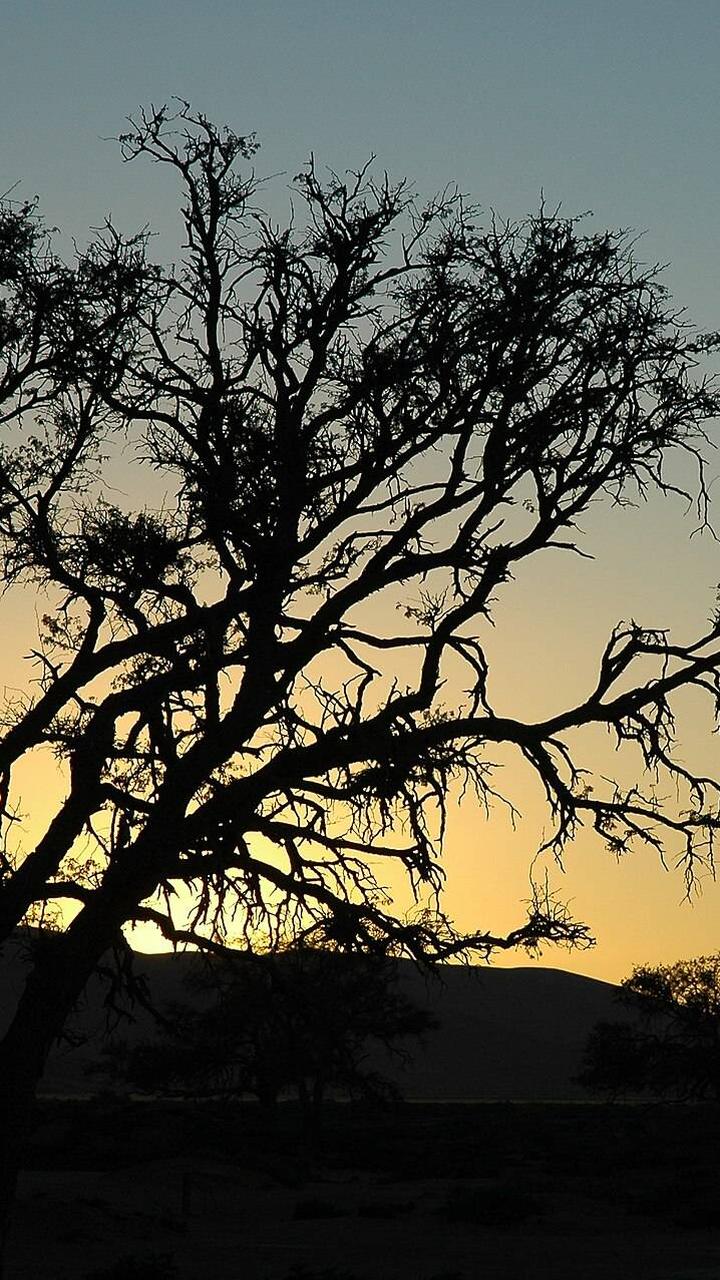
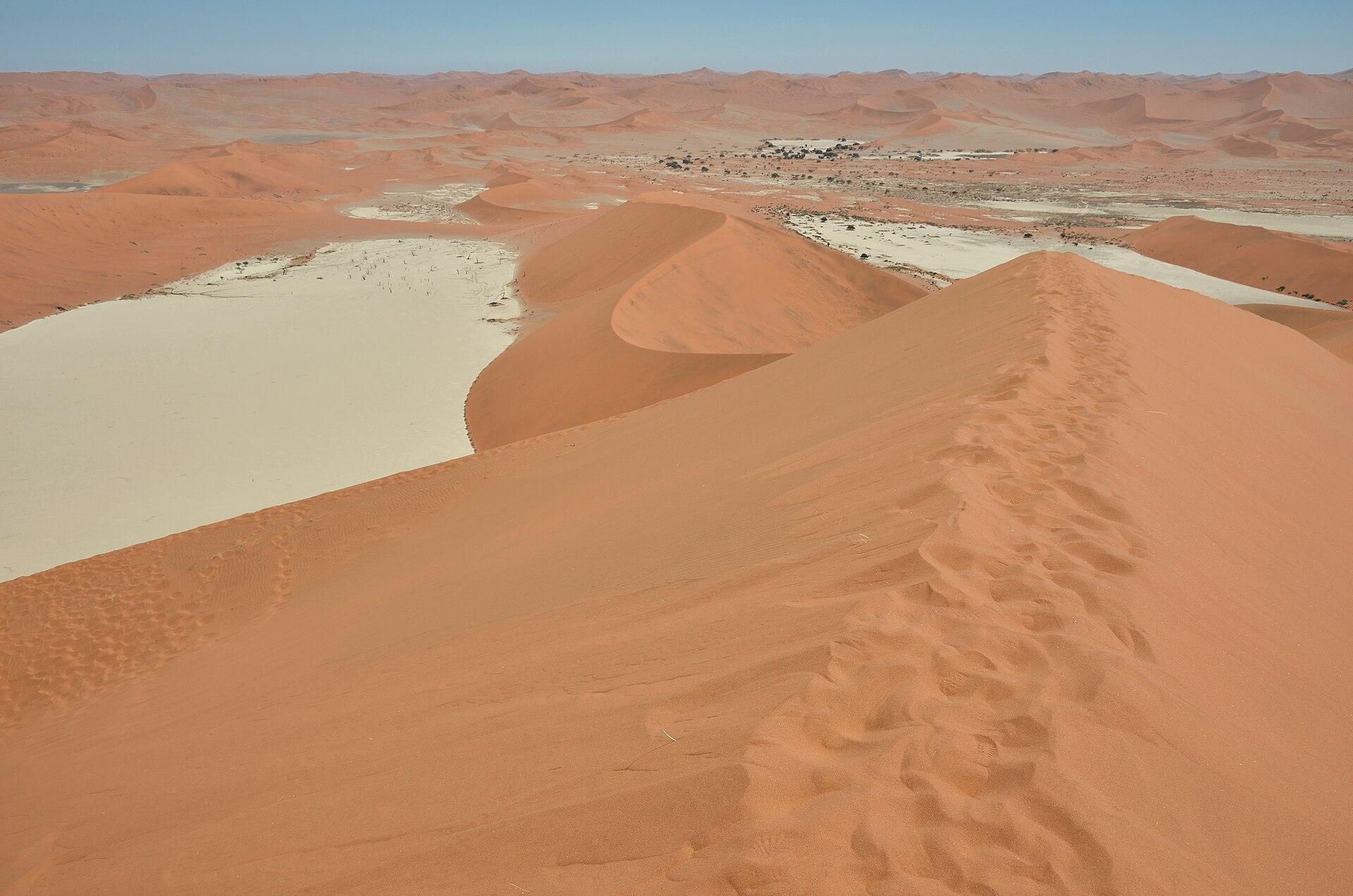
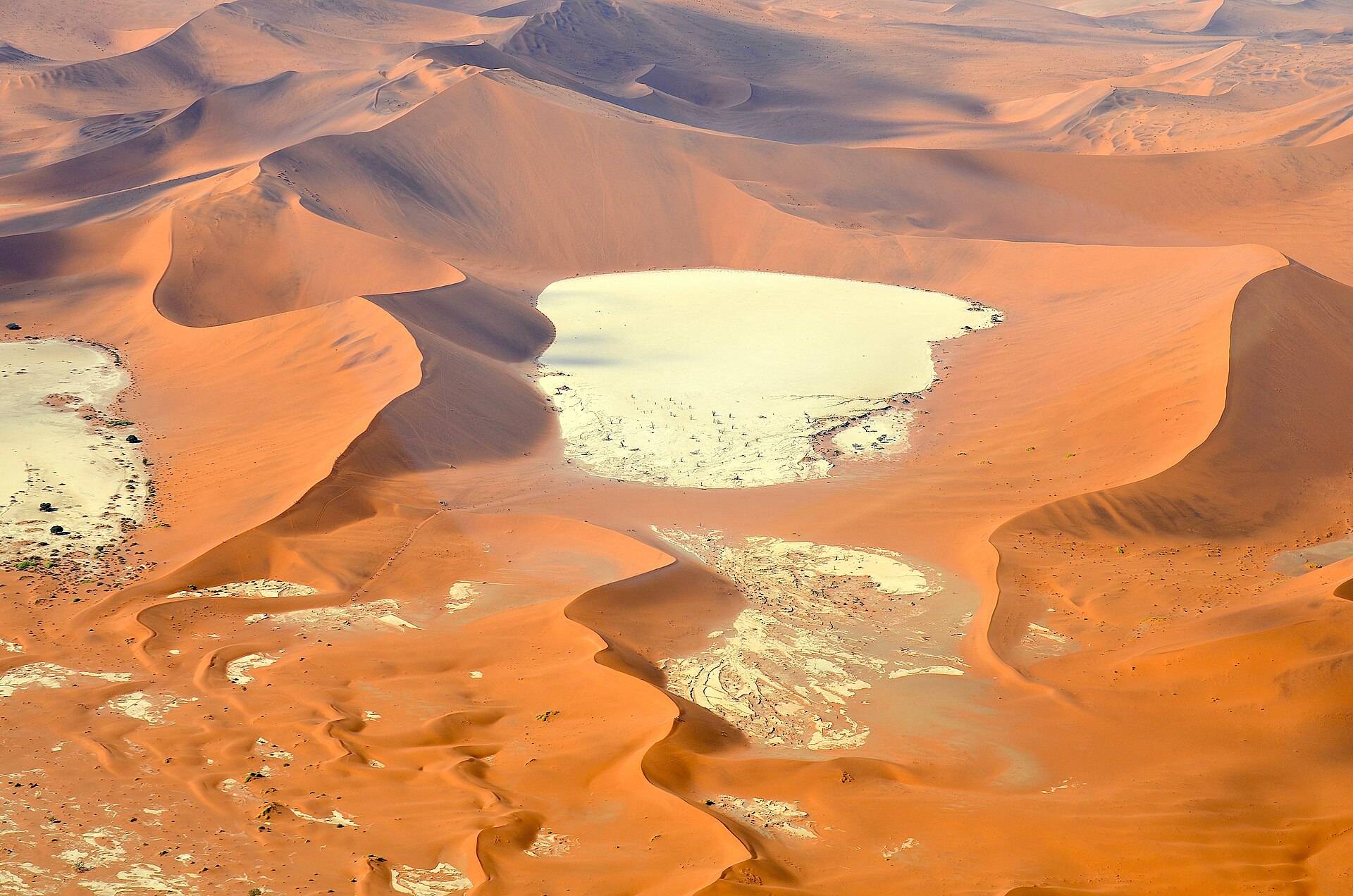
Sossusvlei is a white clay pan at the end of a dry river, walled in by some of the tallest dunes on Earth. The river almost never arrives. The light does, twice a day, and that is what you come for.
The day
Before dawn
You leave in the dark.
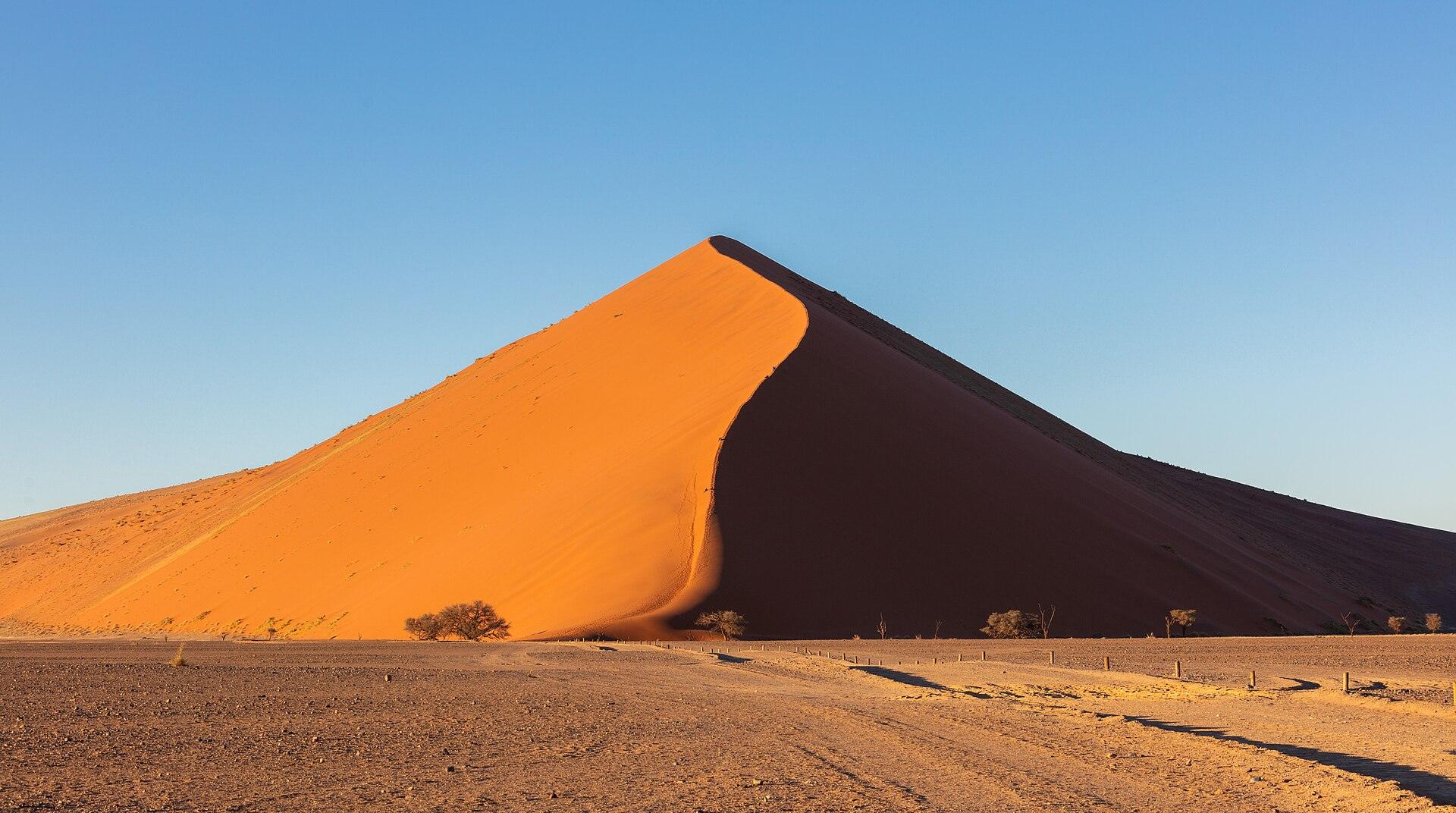
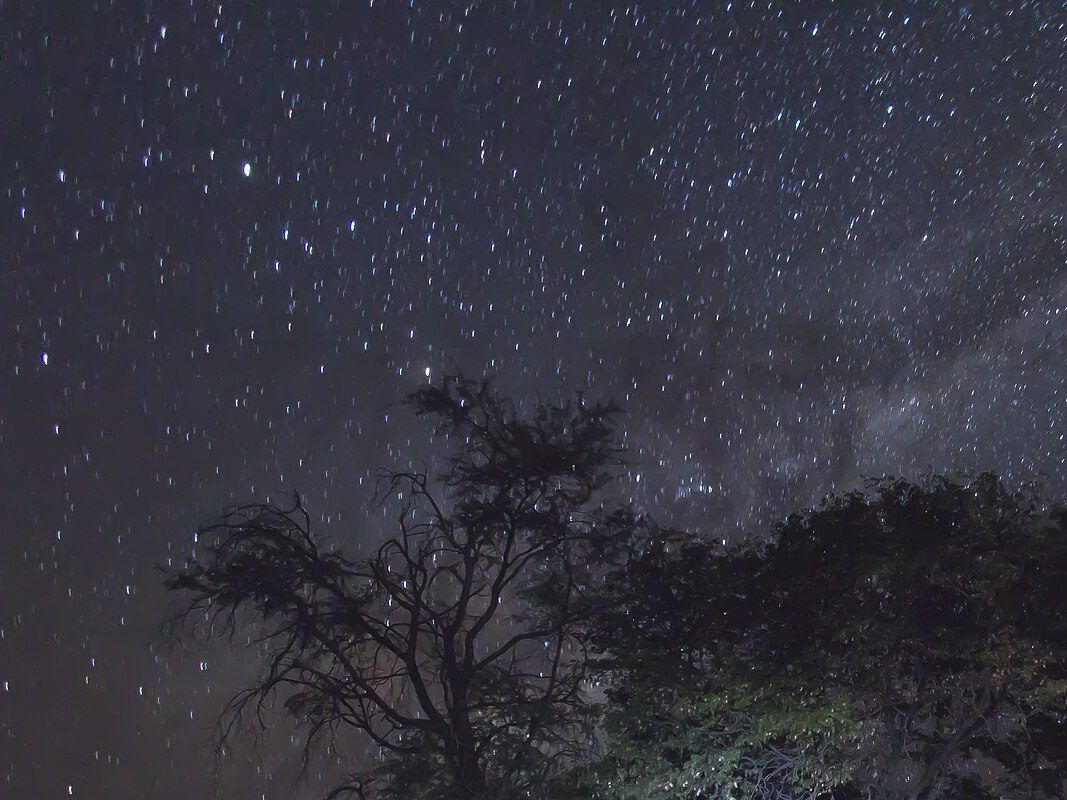
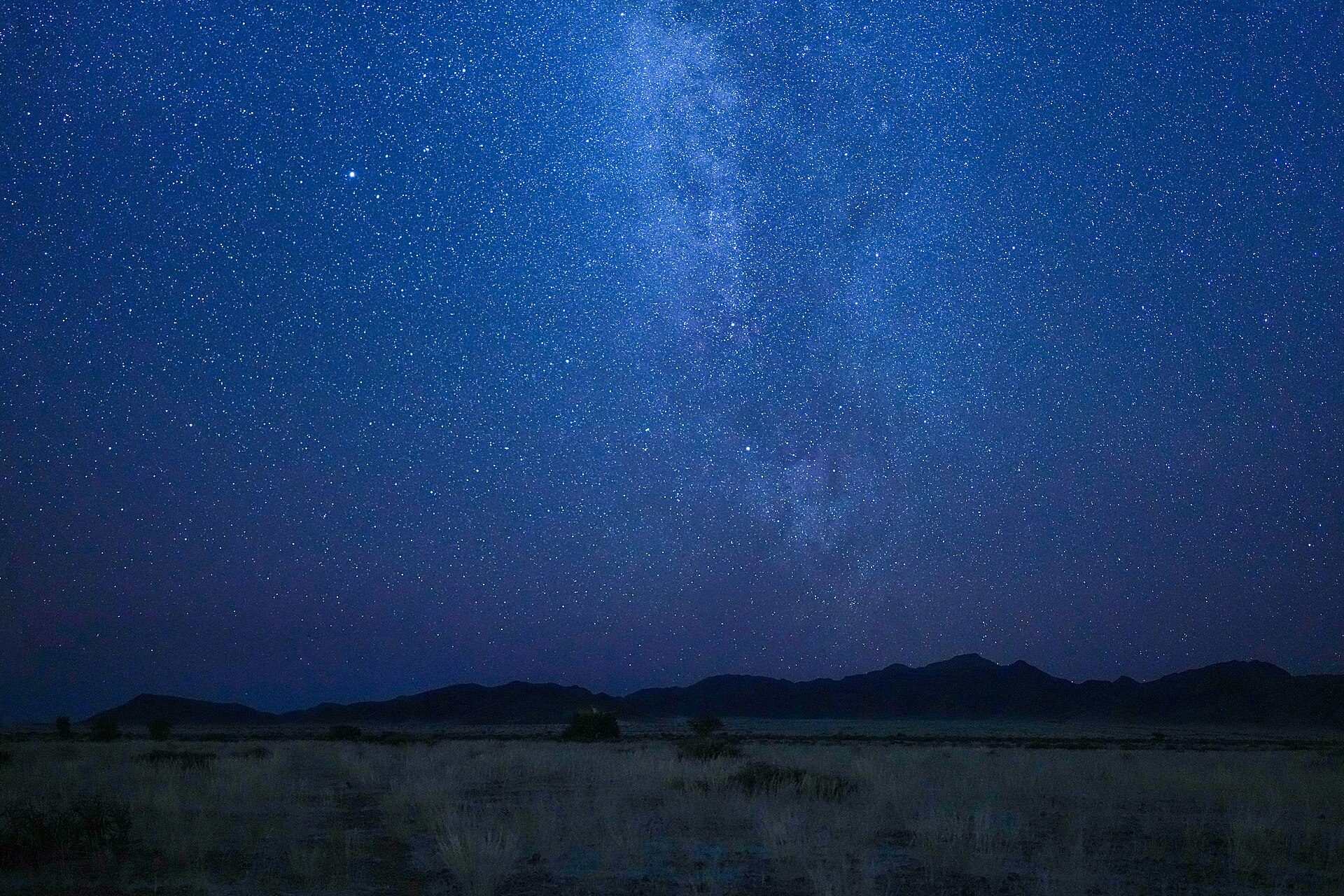
A blanket over your knees and coffee from a flask. The stars are still out, the road runs straight at the dunes, and it is cold enough to see your breath.
First light
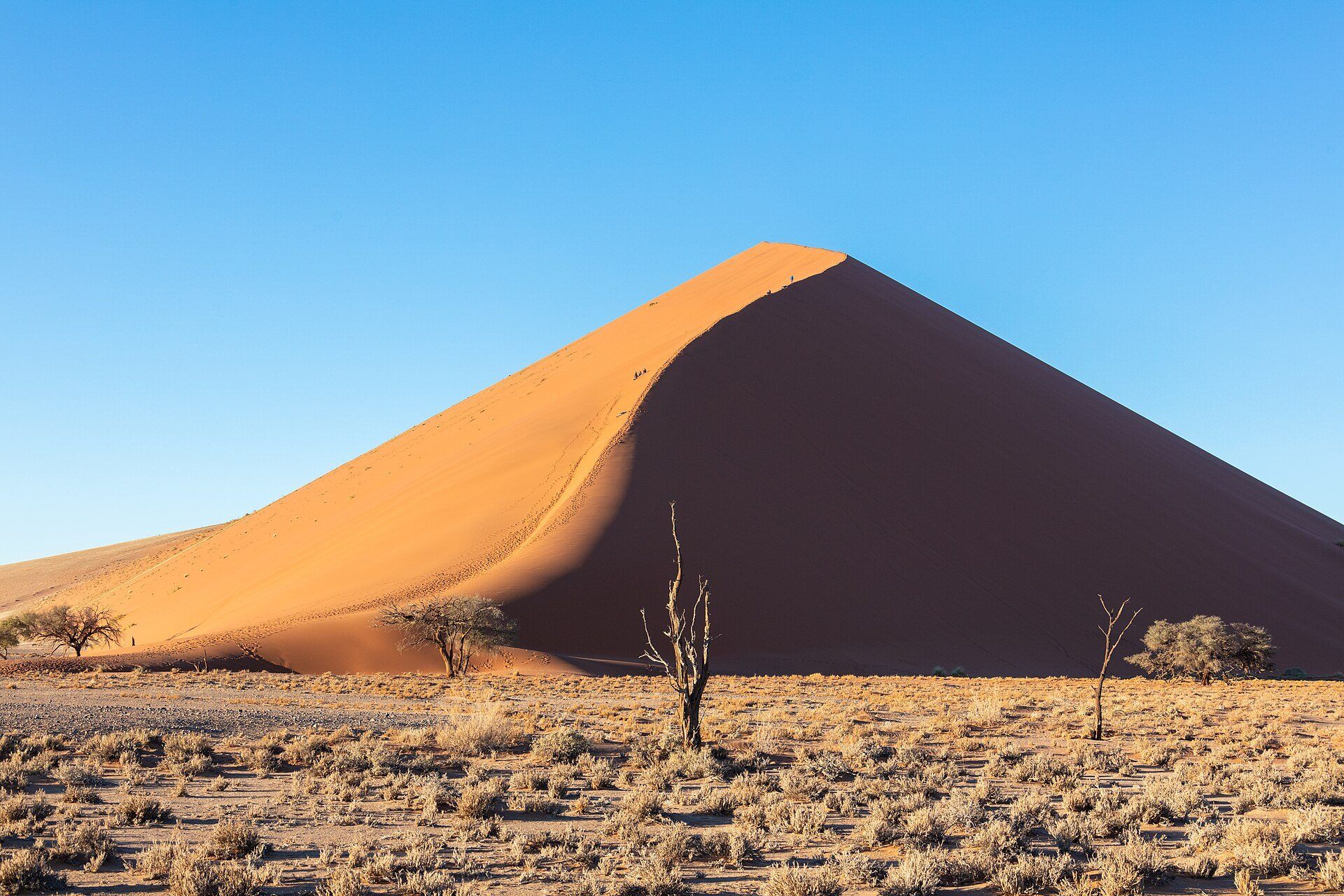
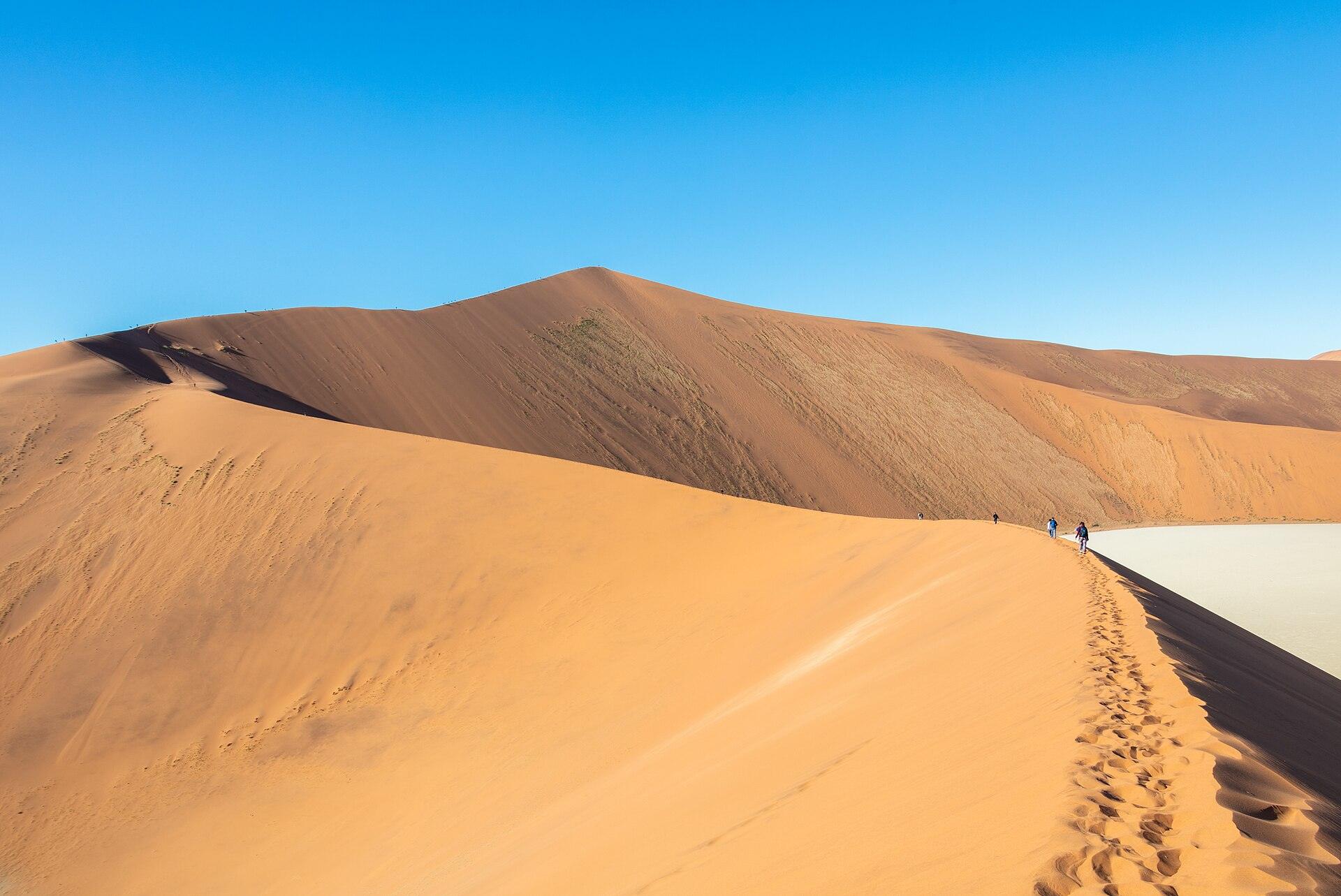
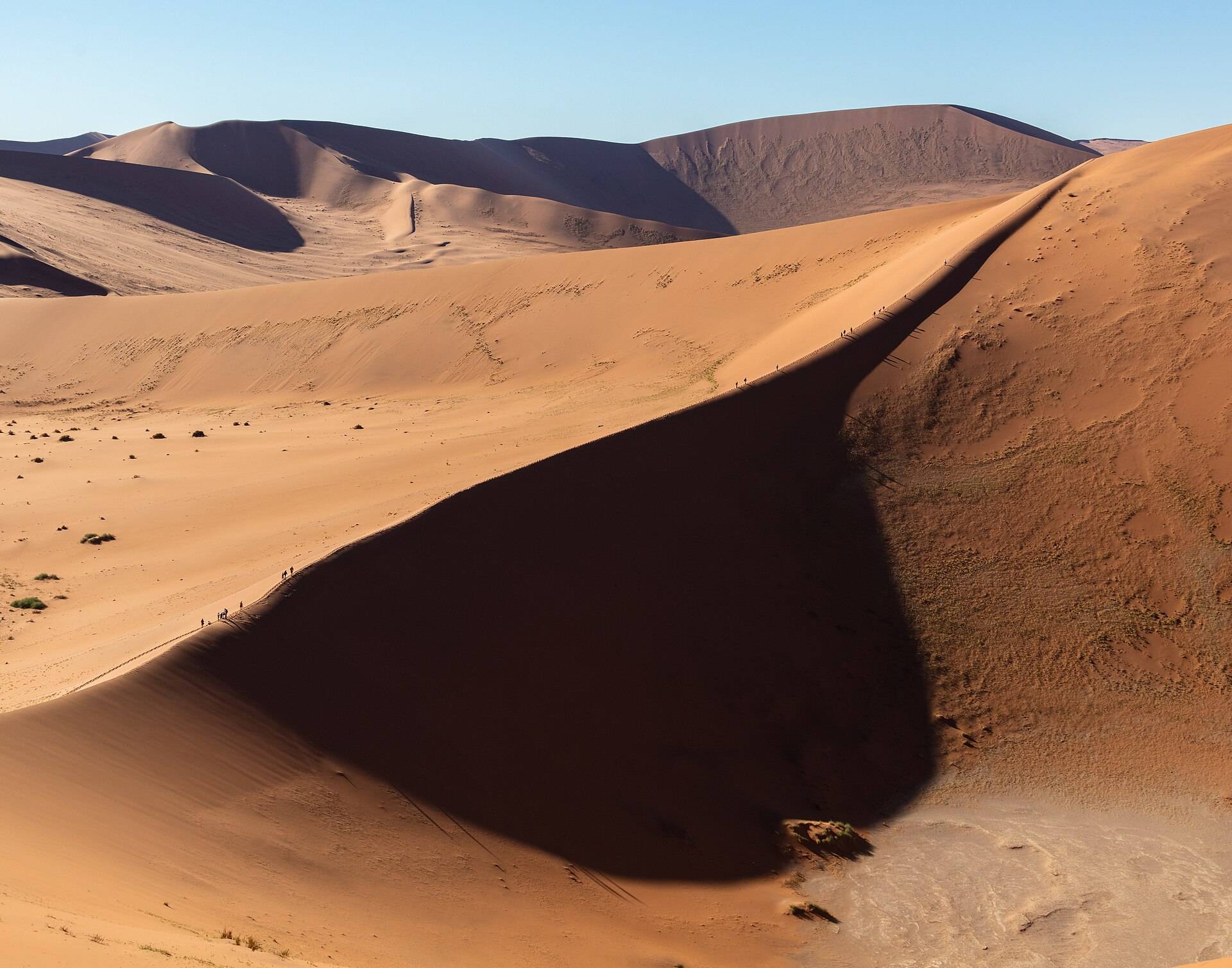
Watch the shadow let go.
The best of it lasts about twenty minutes. You are standing in it.
The climb
Up, before the sand warms.
Big Daddy, along the crest, in the cool of the morning. Take your time going up. Coming down takes ten minutes, and most people run.

The white pan
A forest that stopped.
Camel thorns, dead six or seven hundred years and still standing where the water left them. You find you are walking among them quietly, without having decided to.
The stay
Stay long enough to do it twice.
Sleep as near the dunes as you can, so the drive before dawn is a short one. Give it three mornings: one to climb, one to walk the pan, and one to sit still and watch.
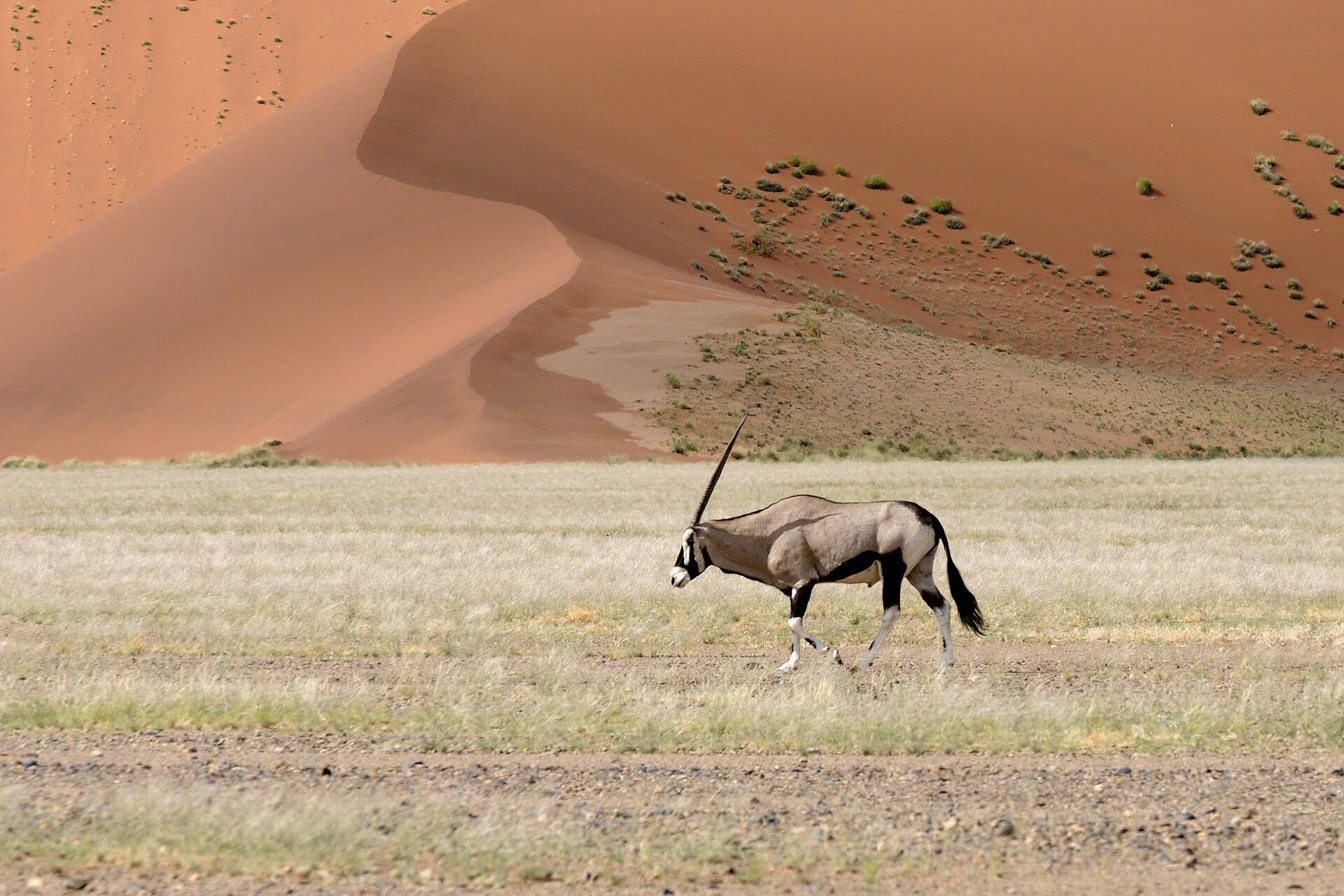
Thinking about it already? Plan your journey
The lodge

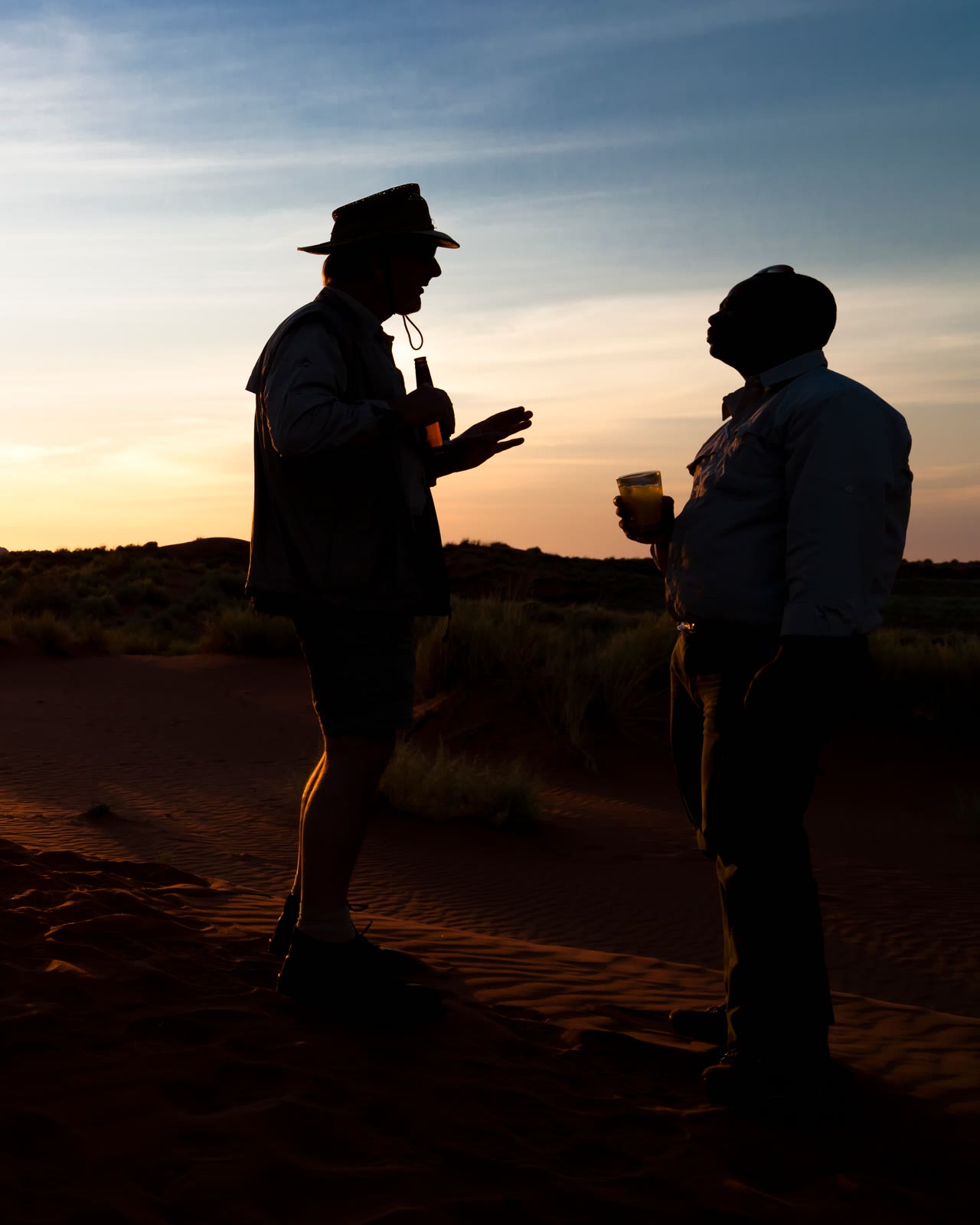
By late morning the desert belongs to the heat. You belong in the shade.
Something cold to drink, a long lunch, and a book you will not finish. Then, as the dunes turn red again, out onto the sand for sundown.
Field notes
- Daylight there today
- Daylight at midwinter, in June
- Big Daddy
- about 325 m
- The gate to the pan
- about 65 km
- In season
- May to September
Your invitation
Which winter morning?
May, as the heat lets go. June and July for cold, clear dawns and the longest nights of stars. August and September for warm afternoons before summer returns.
Plan your journeyEight short questions, about two minutes. Then a letter in your own words.