Galápagos
Nothing here moves away.
Island to island by small yacht, with a naturalist guide. By private arrangement.
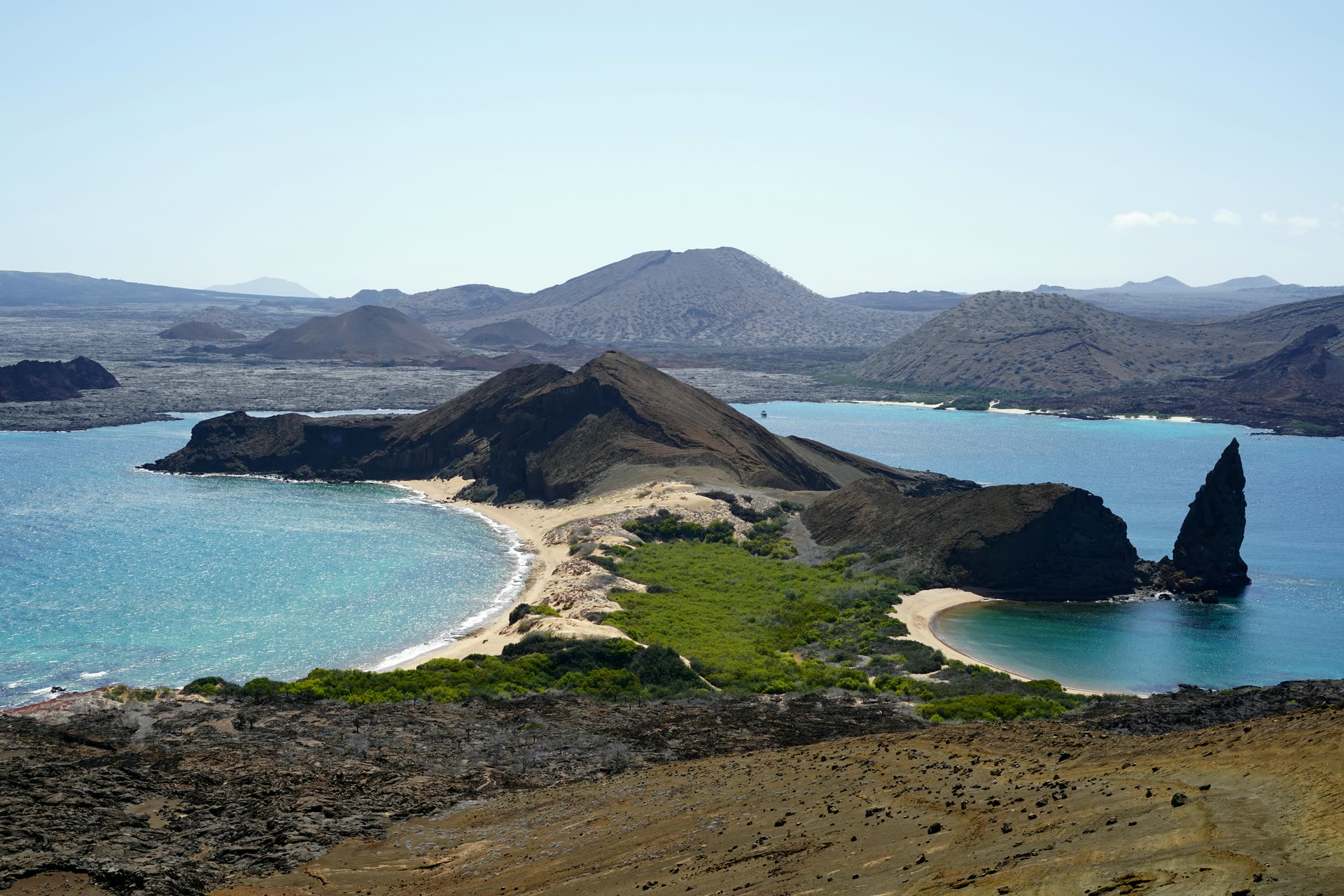
Two bays and a spire of lava, the Galápagos- Season
- All year, in two seasons
- Length
- Around eight days
- Party
- Two to sixteen, with a naturalist guide
- Held in the arrangement
- A small yacht and her crew, your naturalist guide, every landing and every swim, and the flight out from the mainland
The place
A thousand kilometres out in the Pacific, nothing learned to be afraid.
The islands came up out of the sea as bare lava, a long way from anywhere. Whatever reached them swam, flew or drifted, and found almost nothing on shore to run from.
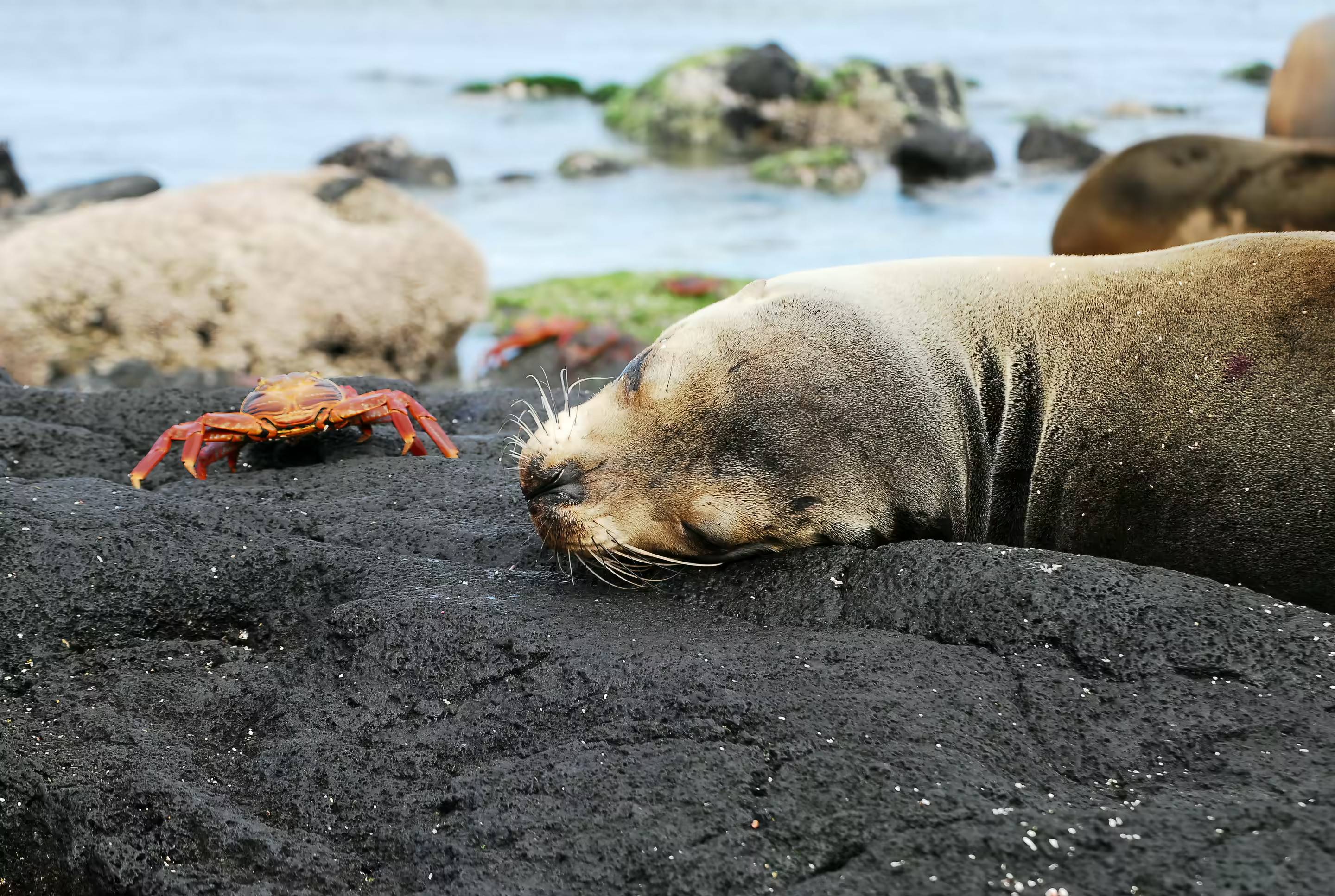
So nothing runs. A sea lion sleeps where you meant to walk. An iguana watches you go by and does not get up. You are the one who gives way.

The days
The landing
You step ashore, and then round a sea lion.
The small boat noses in to black rock. Somebody large is asleep across the way up, with a crab walking past its whiskers. Your guide steps round. So do you.
On the lava
Some of this rock is breathing.
Marine iguanas, heaped on the lava they match, salt drying white on their heads. Further along stands a booby, on feet a blue you would not have believed. Crabs the colour of fire go about their business between them.


In the water
Then you go over the side, and it happens again.
Mask, fins, green water. A turtle comes up beside you and keeps your pace for a while. A sea lion comes a good deal closer than two metres, turns over, and comes back for another look.

If this is the one, tell us when

The next island
Each island is its own world.
They lie hours apart by sea, and no two agree. One is black lava with nothing growing on it. The next is green and in cloud, and giant tortoises cross the track ahead of you in no hurry at all.


That is the shape of it: about eight days, a new island most mornings, ashore and in the water every day. The order of the islands is drawn with you, and with the season.
Plan your journey Choose your seasonThe yacht
You live aboard, and wake somewhere new.
A small yacht, sixteen guests or fewer, chosen with you or taken for your party alone. She makes her passages between islands while you eat or sleep, and most mornings you come on deck to an anchorage you have not seen before.
Sixteen is the most that one naturalist guide may take ashore, and nobody lands here without one.

Looked after, by people who know the animals' hours.
Your guide is a naturalist licensed by the national park. They know which cove the turtles keep to and what the tide is doing at the landing, and when to say nothing at all. The crew have the small boat waiting at the stern, and something cold poured for when you come back salt to the eyebrows.
Field notesThe figures, for those who like them.
- Daylight there today
- The islands
- On the equator, near 090°30′W
- From the mainland
- About 1,000 km
- The rule ashore
- 2 m from every animal
- Ashore with one guide
- 16 guests at most
- Warm season
- December to May
- Cool season
- June to November

Your invitation
How close would you come?
December to May for warm, calm water and the islands in leaf. June to November for cooler water, with more life in it.
Eight short questions, about two minutes. Then a letter in your own words.