Okavango
Sit low, say nothing, and let it come to you.
A narrow boat, a man with a pole, and water that arrives when the rain has gone. By private arrangement.
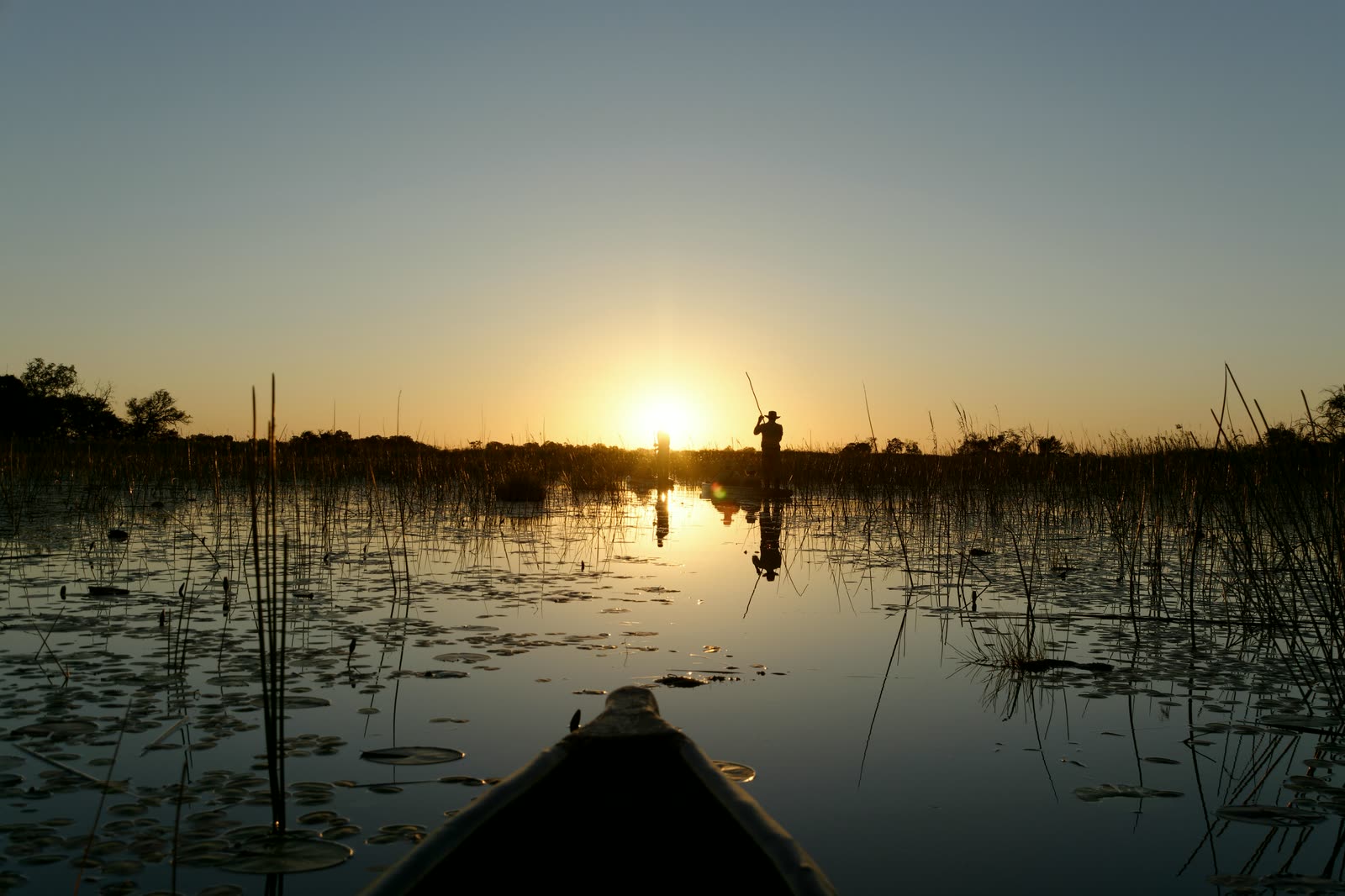
From the mokoro at sunset, Okavango Delta- Season
- June to October
- Length
- Around seven days
- Party
- Two to six, with your own guide and polers
- Held in the arrangement
- Two small camps on the water, the light aircraft between them, your own guide, every meal, and every hour on the channels
The place
A river that never reaches the sea, and a flood that comes in the dry.
The rain falls far to the north, in the highlands of Angola, in the first months of the year. It takes until the middle of the year to get here. By then the Kalahari around it has not seen a cloud for weeks, and the water simply walks out across the sand.
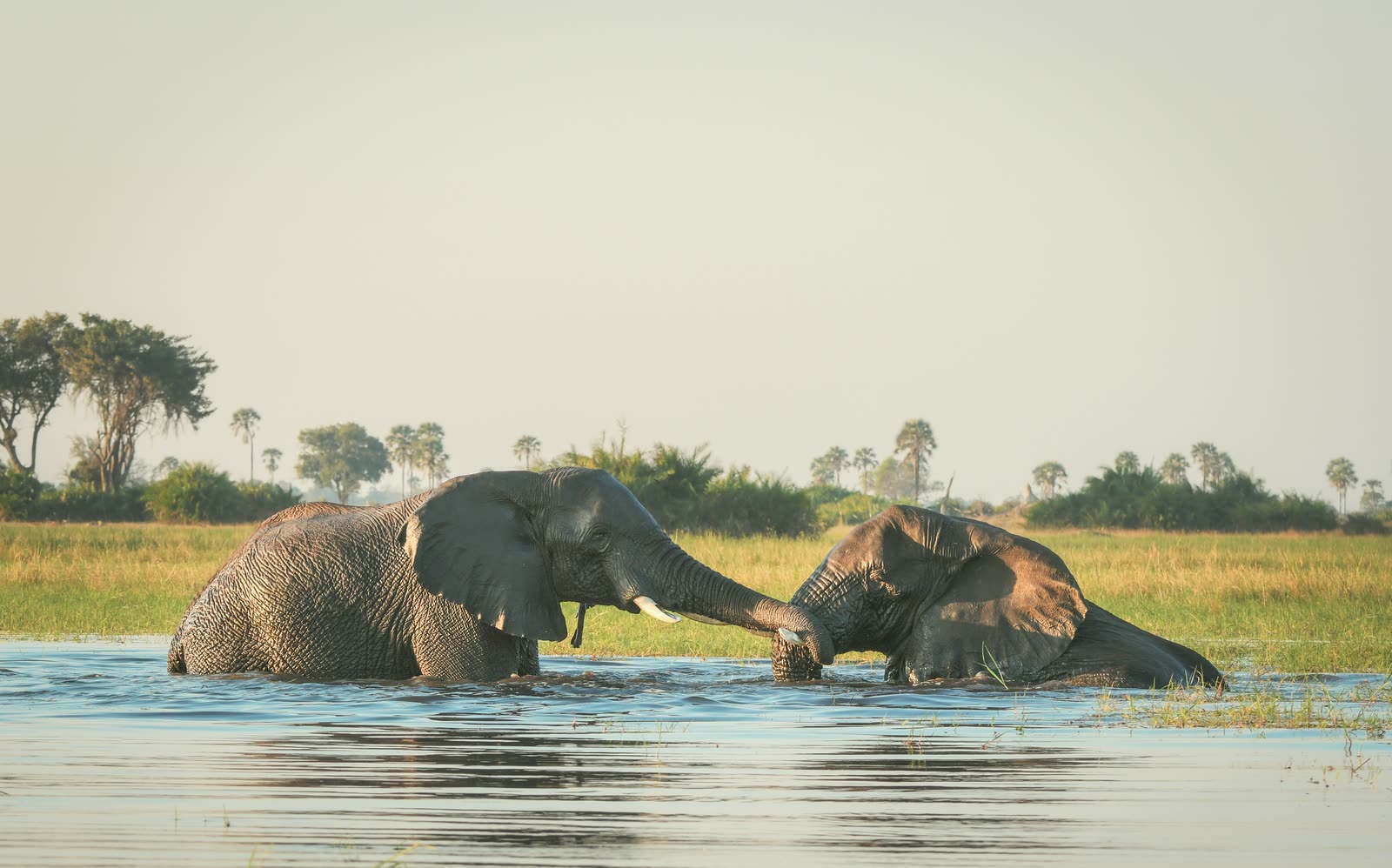
So the Delta is fullest when everything else is driest. Grass turns to channel. Islands appear. And every animal for a hundred miles knows the way.

The days

First morning
They are waiting for you at the edge of the grass.
A mokoro is as long as a room and no wider than your shoulders. You step into the middle, sit on the floor with your back against a rest, and find the water a hand's width below your elbow. Then somebody behind you leans on a pole, and the bank lets go.

In the flood
At this height you see what the water sees.
A reed frog the size of a thumbnail, holding a stem. Lily pads sliding past your elbow. And once, when the pole stops for no reason you can find, a red lechwe standing to its knees in the flood, looking straight back at you.

If this is the one, tell us when

On the islands
Some days you get out and walk.
The boat noses into an island and a tracker steps ashore first. He reads the sand the way you read a page: who came down to drink, how long ago, and in what mood. What made the tracks is another matter.
Sundown
Then you stay out for the dark.
The sun goes into the reeds and the water turns to brass. Nobody starts an engine, because there is no engine. You come home by ear: the pole, the drip from it, the frogs beginning, and somewhere off in the channel a hippo breathing out.

That is the shape of it: about seven days, two camps, and most of your waking hours within reach of the water. The plan is drawn with you, and the flood has the last word.
Plan your journeyThe camp
Canvas, a lamp, and the water a few steps away.
You stay in small camps on islands in the flood: a handful of tents under old trees, raised on timber, open to the air on the side that faces the channel. They are chosen with you, for their water, their guides, and how few other people you will meet.
What you remember is the night. A fire, a table laid outside, and a dark so complete that you hear the Delta far better than you ever saw it.
Looked after by the people who grew up on it.
The man with the pole reads this water the way you read a street. He knows which pool the hippo keep, and goes round it without a word. Your guide knows what you came hoping for, and will not promise it. And somebody has the lamps lit before you are back.

Field notesThe figures, for those who like them.
- Daylight there today
- Daylight in the middle of July
- Okavango Delta
- 19°14′S 023°03′E
- The rain, in Angola
- Roughly December to March
- The flood, in the Delta
- At its height roughly June to August

Your invitation
How still can you sit?
June and July for the flood arriving across the Delta, and cold bright mornings. August to October for dry country, and the herds close to the water.
Eight short questions, about two minutes. Then a letter in your own words.